Our Three Step Process
July 3, 2025
AI Integration in Design: Rad or Bogus?
Our Three Step Process
July 3, 2025
AI Integration in Design: Rad or Bogus?
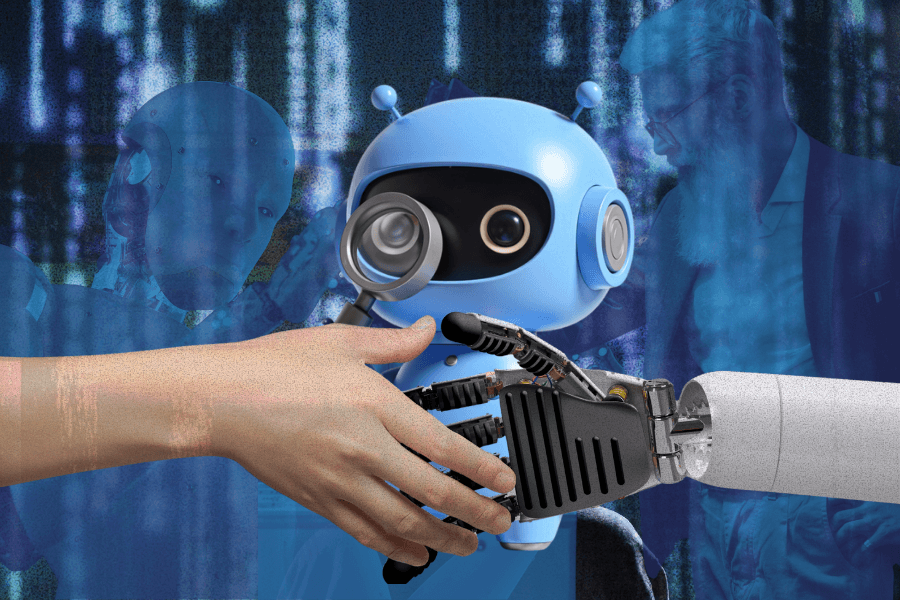
Is artificial intelligence a creative ally or a danger to artistic integrity? That question has been at the center of debates across the design community, as AI shifts from futuristic experiment to everyday reality. From TikTok edits to university competitions, AI-generated works are everywhere. For some, it represents efficiency and inspiration. For others, it feels like the erosion of originality. This article cuts through both hype and fear, looking at how AI is being used in design and asking: is it rad, or is it bogus?
How Designers Use AI Today
For many designers, AI isn’t the enemy, it’s just another tool and other programs are now part of creative workflows, helping designers visualize ideas faster. Instead of spending hours sketching rough concepts, they can type a prompt and get dozens of directions to refine. “It’s like brainstorming with a machine that never runs out of energy,” one art student stated.
AI is also breaking down barriers. A small café owner with no design background can use AI to draft a logo or menu layout. Students can experiment with bold visuals without needing an expensive suite of tools. This shift is similar to what Canva did for design in the 2010s, it opened doors for people who were never formally trained but still wanted to express themselves. The difference now is that AI pushes experimentation into overdrive.
Authenticity and Ethics
But here’s where things get complicated. Just because AI can generate something doesn’t always mean it should. A lot of AI outputs look sleek at first glance but lack the heart and story that human designers bring. As many creatives argue, design isn’t just about how something looks, it’s about the culture, intention, and emotion behind it.
There are also the ethical knots. Most AI models are trained on images pulled from the internet, often without asking permission. So when an AI spits out a logo in your favorite style, whose work is it really echoing? The designer who unknowingly contributed their art to a data set, or the person who typed the prompt? Add to that the anxiety about jobs, will companies start replacing junior designers with a monthly subscription to an AI tool?, and it’s clear why a lot of creatives feel uneasy.
When AI Goes Viral
The conversation isn’t just happening in design circles, it’s spilling into pop culture too. TikTok is flooded with AI-generated music covers and fan art, some so convincing that they blur the line between parody and piracy. Even Coca-Cola leaned into the trend with its Create Real Magic campaign, inviting fans to generate Coke-themed AI art. It was playful, but it also made some people wonder: was this genuine creativity, or a clever marketing shortcut?
We are no different from the people or companies abroad that use AI. Recently, the Manuel S. Enverga University Foundation ran into its own AI dilemma. The school held a mascot design contest, only for students to later discover that the winning entry, and several of the top 10 submissions were made using AI. Instead of celebrating creativity, the contest ended in frustration, with students arguing that AI entries shouldn’t compete with hand-drawn ones. It was a small contest, but the outrage reflected a much bigger question: if we don’t set rules around AI in creative spaces, are we really encouraging originality, or just rewarding whoever can write the best prompt?
Rad or Bogus?
The truth is, AI is both. It’s rad when it helps a young designer push their limits, or when it saves hours of repetitive work so more energy can go into real storytelling. But it’s bogus when it replaces creativity with shortcuts, or when competitions, schools, and even companies don’t draw clear lines about its use.
Maybe the better way to look at AI is this: it’s not here to replace us, but to challenge us. Designers have always adapted to new tools, from Photoshop in the ’90s to Canva in the 2010s. AI is just the next one, faster, smarter, and yes, trickier. But in the end, the soul of design doesn’t come from an algorithm. It comes from people, their stories, their struggles, their humor, their culture.
So is AI in design rad or bogus? Honestly, it depends on how we use it. In the right hands, it’s a powerful collaborator. In the wrong hands, it’s just noise. And maybe that’s the real challenge for creatives today: not fighting AI, but making sure that what’s human in design never gets lost.
Written by Lorrein Joy Luna
How Designers Use AI Today
For many designers, AI isn’t the enemy, it’s just another tool and other programs are now part of creative workflows, helping designers visualize ideas faster. Instead of spending hours sketching rough concepts, they can type a prompt and get dozens of directions to refine. “It’s like brainstorming with a machine that never runs out of energy,” one art student stated.
AI is also breaking down barriers. A small café owner with no design background can use AI to draft a logo or menu layout. Students can experiment with bold visuals without needing an expensive suite of tools. This shift is similar to what Canva did for design in the 2010s, it opened doors for people who were never formally trained but still wanted to express themselves. The difference now is that AI pushes experimentation into overdrive.
Authenticity and Ethics
But here’s where things get complicated. Just because AI can generate something doesn’t always mean it should. A lot of AI outputs look sleek at first glance but lack the heart and story that human designers bring. As many creatives argue, design isn’t just about how something looks, it’s about the culture, intention, and emotion behind it.
There are also the ethical knots. Most AI models are trained on images pulled from the internet, often without asking permission. So when an AI spits out a logo in your favorite style, whose work is it really echoing? The designer who unknowingly contributed their art to a data set, or the person who typed the prompt? Add to that the anxiety about jobs, will companies start replacing junior designers with a monthly subscription to an AI tool?, and it’s clear why a lot of creatives feel uneasy.
When AI Goes Viral
The conversation isn’t just happening in design circles, it’s spilling into pop culture too. TikTok is flooded with AI-generated music covers and fan art, some so convincing that they blur the line between parody and piracy. Even Coca-Cola leaned into the trend with its Create Real Magic campaign, inviting fans to generate Coke-themed AI art. It was playful, but it also made some people wonder: was this genuine creativity, or a clever marketing shortcut?
We are no different from the people or companies abroad that use AI. Recently, the Manuel S. Enverga University Foundation ran into its own AI dilemma. The school held a mascot design contest, only for students to later discover that the winning entry, and several of the top 10 submissions were made using AI. Instead of celebrating creativity, the contest ended in frustration, with students arguing that AI entries shouldn’t compete with hand-drawn ones. It was a small contest, but the outrage reflected a much bigger question: if we don’t set rules around AI in creative spaces, are we really encouraging originality, or just rewarding whoever can write the best prompt?
Rad or Bogus?
The truth is, AI is both. It’s rad when it helps a young designer push their limits, or when it saves hours of repetitive work so more energy can go into real storytelling. But it’s bogus when it replaces creativity with shortcuts, or when competitions, schools, and even companies don’t draw clear lines about its use.
Maybe the better way to look at AI is this: it’s not here to replace us, but to challenge us. Designers have always adapted to new tools, from Photoshop in the ’90s to Canva in the 2010s. AI is just the next one, faster, smarter, and yes, trickier. But in the end, the soul of design doesn’t come from an algorithm. It comes from people, their stories, their struggles, their humor, their culture.
So is AI in design rad or bogus? Honestly, it depends on how we use it. In the right hands, it’s a powerful collaborator. In the wrong hands, it’s just noise. And maybe that’s the real challenge for creatives today: not fighting AI, but making sure that what’s human in design never gets lost.
Written by Lorrein Joy Luna
Is artificial intelligence a creative ally or a danger to artistic integrity? That question has been at the center of debates across the design community, as AI shifts from futuristic experiment to everyday reality. From TikTok edits to university competitions, AI-generated works are everywhere. For some, it represents efficiency and inspiration. For others, it feels like the erosion of originality. This article cuts through both hype and fear, looking at how AI is being used in design and asking: is it rad, or is it bogus?
How Designers Use AI Today
For many designers, AI isn’t the enemy, it’s just another tool and other programs are now part of creative workflows, helping designers visualize ideas faster. Instead of spending hours sketching rough concepts, they can type a prompt and get dozens of directions to refine. “It’s like brainstorming with a machine that never runs out of energy,” one art student stated.
AI is also breaking down barriers. A small café owner with no design background can use AI to draft a logo or menu layout. Students can experiment with bold visuals without needing an expensive suite of tools. This shift is similar to what Canva did for design in the 2010s, it opened doors for people who were never formally trained but still wanted to express themselves. The difference now is that AI pushes experimentation into overdrive.
Authenticity and Ethics
But here’s where things get complicated. Just because AI can generate something doesn’t always mean it should. A lot of AI outputs look sleek at first glance but lack the heart and story that human designers bring. As many creatives argue, design isn’t just about how something looks, it’s about the culture, intention, and emotion behind it.
There are also the ethical knots. Most AI models are trained on images pulled from the internet, often without asking permission. So when an AI spits out a logo in your favorite style, whose work is it really echoing? The designer who unknowingly contributed their art to a data set, or the person who typed the prompt? Add to that the anxiety about jobs, will companies start replacing junior designers with a monthly subscription to an AI tool?, and it’s clear why a lot of creatives feel uneasy.
When AI Goes Viral
The conversation isn’t just happening in design circles, it’s spilling into pop culture too. TikTok is flooded with AI-generated music covers and fan art, some so convincing that they blur the line between parody and piracy. Even Coca-Cola leaned into the trend with its Create Real Magic campaign, inviting fans to generate Coke-themed AI art. It was playful, but it also made some people wonder: was this genuine creativity, or a clever marketing shortcut?
We are no different from the people or companies abroad that use AI. Recently, the Manuel S. Enverga University Foundation ran into its own AI dilemma. The school held a mascot design contest, only for students to later discover that the winning entry, and several of the top 10 submissions were made using AI. Instead of celebrating creativity, the contest ended in frustration, with students arguing that AI entries shouldn’t compete with hand-drawn ones. It was a small contest, but the outrage reflected a much bigger question: if we don’t set rules around AI in creative spaces, are we really encouraging originality, or just rewarding whoever can write the best prompt?
Rad or Bogus?
The truth is, AI is both. It’s rad when it helps a young designer push their limits, or when it saves hours of repetitive work so more energy can go into real storytelling. But it’s bogus when it replaces creativity with shortcuts, or when competitions, schools, and even companies don’t draw clear lines about its use.
Maybe the better way to look at AI is this: it’s not here to replace us, but to challenge us. Designers have always adapted to new tools, from Photoshop in the ’90s to Canva in the 2010s. AI is just the next one, faster, smarter, and yes, trickier. But in the end, the soul of design doesn’t come from an algorithm. It comes from people, their stories, their struggles, their humor, their culture.
So is AI in design rad or bogus? Honestly, it depends on how we use it. In the right hands, it’s a powerful collaborator. In the wrong hands, it’s just noise. And maybe that’s the real challenge for creatives today: not fighting AI, but making sure that what’s human in design never gets lost.
Written by Lorrein Joy Luna
Other Blogs
Other Blogs
Check our other project Blogs with useful insight and information for your businesses
Other Blogs
Other Blogs
Check our other project Blogs with useful insight and information for your businesses
Other Blogs
Other Blogs
Check our other project Blogs with useful insight and information for your businesses